Audison · bit Play HD
Audison bit Play HD Review: Capable but Dated Hi-Res Player
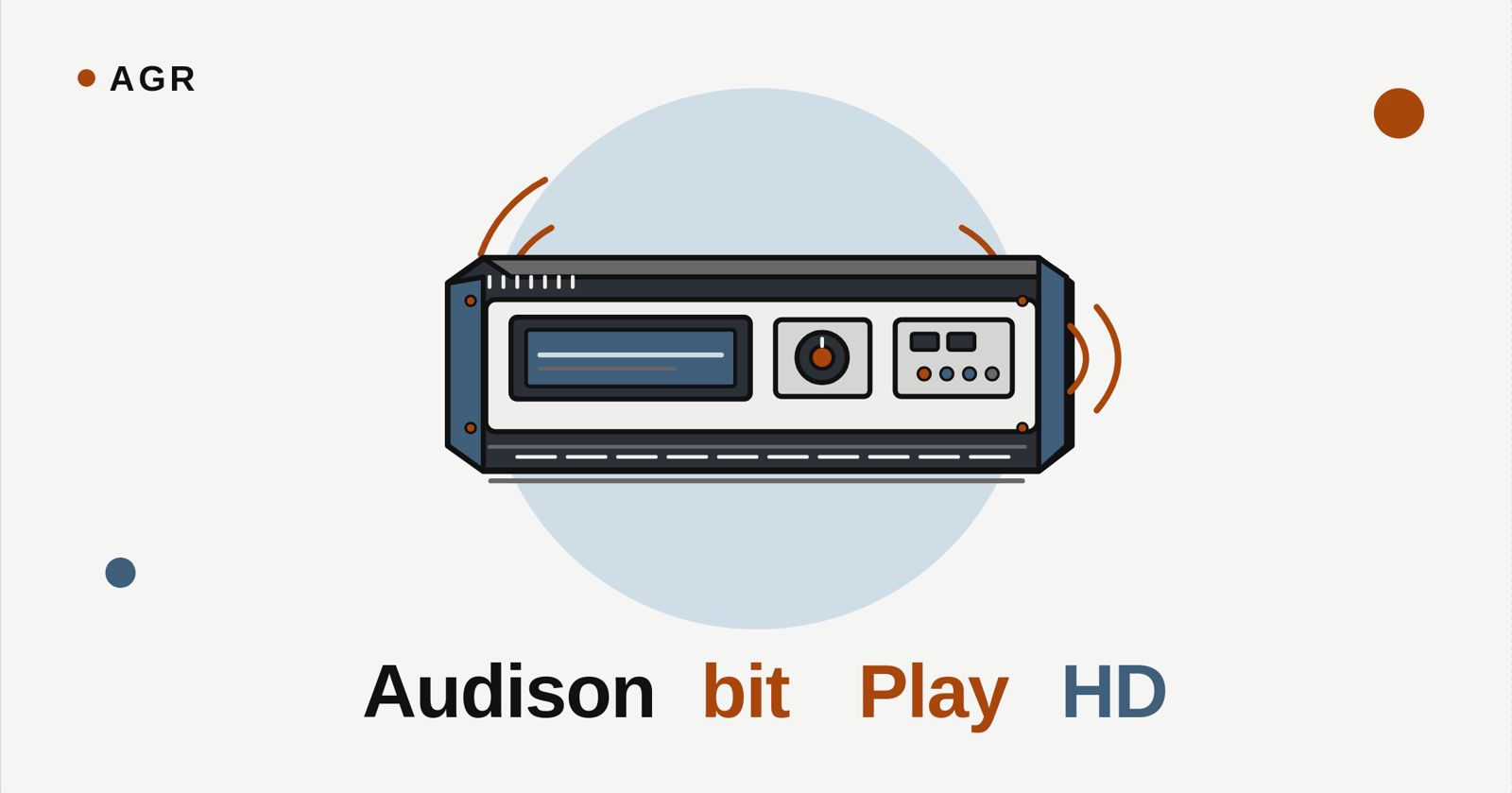
Research-based review of the Audison bit Play HD, a 24-bit/96 kHz car media player with Toslink output. Specs, price, alternatives and who should still buy it.
Pros
- Toslink output carries PCM up to 96 kHz/24-bit to Audison processors with an optical input
- Plays FLAC and WAV up to 96 kHz/24-bit, plus OGG, AAC and MP3, from SSD or USB
- Rated analog stage: 0.003% THD at 1 kHz, 1 Vrms and 100 dBA signal-to-noise ratio
- Optional 240 GB SSD in a damped housing, with support stated for drives up to 2 TB
- Controlled by two supplied IR remotes, a phone app or the optional DRC MP
- HDMI and composite video outputs show the player interface on a head unit screen
- Compact size of 249 x 98 x 41 mm and 0.9 kg suits hidden mounting
Cons
- Digital output tops out at 96 kHz, so no 192 kHz files despite some retailer claims
- No current Audison product page found, and firmware needs a login portal that may not be active
- $649.99 to $799.99 price for 2014 hardware, far above the EUR 189 B-CON II
- No built-in streaming-service apps or CarPlay and Android Auto listed in the specifications
- Rated for 0 to 50 degrees C ambient, a limit a sun-baked cabin can exceed
- No independent measurements or professional lab tests found to confirm the rated figures
Specifications
| Analog output | 2 x RCA, 1 Vrms; THD 0.003% at 1 kHz, 1 Vrms; S/N 100 dBA; 20 Hz to 20 kHz |
|---|---|
| Control | 2 IR remotes (ARC and USR), phone app, optional DRC MP via RJ12; AC Link RJ12 |
| Digital output | 1 x Toslink S/P-DIF, PCM up to 96 kHz/24-bit |
| Dimensions | 249 x 98 x 41 mm (9.80 x 3.85 x 1.61 in) |
| Launch and US list price | Announced December 2014; US MSRP $649 (no SSD) and $799 (240 GB SSD) |
| Operating temperature | 0 to 50 degrees C ambient |
| Other audio formats | OGG, AAC, MPEG audio (MP1, MP2, MP3, MPA) |
| Power | 8.5 to 14 VDC; 1.0 A idle with internal SSD; internal 3 A fuse |
| Remote in / out | 7 to 15 VDC in (1 mA); 12 VDC out (130 mA) |
| Storage | Optional internal 240 GB 2.5-inch SSD (SSD version, up to 2 TB supported); 2 x USB 2.0 for drives |
| Supported hi-res files | FLAC and WAV up to 96 kHz/24-bit |
| Type | Hideaway in-car hi-res media player (SSD and non-SSD versions) |
| Video output | HDMI v1.3 up to 1080p; composite video (480i/576i) |
| Weight | 0.9 kg (1.98 lb) |
| Wireless | 802.11n Wi-Fi hotspot via supplied USB dongle; Audison app (iOS and Android) and DLNA apps |
Verdict
The Audison bit Play HD suits owners with a FLAC or WAV library and an Audison processor with a Toslink input who want a hidden, dedicated source. Its main strength is a rated 96 kHz/24-bit digital output with 0.003% THD analog stage; its main compromises are a 96 kHz ceiling, no streaming-app or CarPlay support and unclear current support. At $649.99 to $799.99 it is launch-era pricing for a 2014 design, so streaming-focused buyers should look at the much cheaper B-CON II.
The Audison bit Play HD is a hideaway car media player built to feed 24-bit/96 kHz FLAC and WAV files into an Audison digital processor. Whether it is worth buying today depends on one thing: if you want local hi-res files and already run, or plan to run, an Audison processor with a Toslink input, it still does a specific job well on paper. If you mostly stream from your phone, a much cheaper Bluetooth receiver covers most of the same ground. The model dates from 2014, and I could not find a current Audison product page for it, so check availability and support before you commit.
How this review was made
This is a specification and research review. I did not install, listen to or measure a bit Play HD, and nothing here is first-person listening experience. The facts come from the manufacturer's January 2016 product information sheet, Audison's current website, the 2014 launch coverage on audioXpress, and US retailer listings checked on 11 October 2026. I found no independent lab measurements or professional hands-on reviews of this unit, so performance statements rest on rated manufacturer figures. The only owner commentary I found is a single forum thread, and I treat it as anecdotal. Where sources disagree I say so, and anything I could not verify is marked "not confirmed". The rating at the end is based on that evidence and nothing else.
Design and build
The bit Play HD is a compact black box meant to be hidden under a seat or behind a panel. The manufacturer lists it at 249 x 98 x 41 mm (about 9.8 x 3.9 x 1.6 in) and 0.9 kg (1.98 lb), which works out to roughly 1.0 litre. The SSD version carries a 2.5-inch SATA solid-state drive in a slot Audison describes as mechanically damped, an approach aimed at the vibration a car produces. Case material and internal construction quality are not stated in the sources I found, so I cannot speak to them.
One rating deserves attention for hot climates: the sheet gives an ambient operating range of 0 to 50 degrees C. A closed car parked in the sun can exceed that, so mounting location matters more than usual.
Features and usability
The player handles FLAC and WAV up to 96 kHz/24-bit, plus OGG, AAC and MPEG audio, and it also plays video up to 1080p over HDMI. Storage comes from the optional internal 240 GB SSD (the sheet says the slot supports drives up to 2 TB) or from two USB 2.0 ports. A supplied USB extension lets you plug a flash drive in at the dash.
Control works three ways. Two infrared remotes are supplied, one compact audio-focused unit and a larger one for on-screen navigation. A free Audison app for iOS and Android connects over the player's own 802.11n Wi-Fi network through a supplied USB dongle, and standard DLNA apps also work. Audison's materials say that streaming a phone's own music to the player is available through its app on Android only. The App Store listing I checked shows version 2.0 from August 2017 and states that it needs firmware 2.0.x.x or newer, which Audison says is downloaded from its bit Drive portal after logging in. I could not confirm that portal is still active.
If your head unit has a video input, HDMI or composite output shows the player's own interface on the dash screen. An optional Audison DRC MP controller adds a physical knob-style interface and, per its listing, a power-off delay setting for the player. The spec sheet lists no built-in streaming-service apps and no CarPlay or Android Auto, which matters for anyone used to modern head units.
Sound and performance
With no independent measurements available, the evidence is the rated specification. The player outputs PCM up to 96 kHz/24-bit over Toslink, and its analog RCA outputs are rated at 1 Vrms with 0.003% THD at 1 kHz, a signal-to-noise ratio of 100 dBA and a 20 Hz to 20 kHz bandwidth. Those are the manufacturer's numbers, measured under its own conditions.

Two points put those figures in context. First, a 100 dBA analog signal-to-noise ratio is close to the theoretical range of 16-bit audio (about 98 dB) and far below the roughly 146 dB theory allows for 24 bits. So the 24-bit label describes the file and digital-output format, not the analog stage, which is why Audison pushes the Toslink route into its processors. Second, the manufacturer sheet gives the Toslink output a ceiling of 96 kHz. Several European retailer listings advertise a 192 kHz S/PDIF output instead, and that wording appears to mix up the product with Audison's marketing about DAC requirements. I followed the manufacturer sheet.
Whether 96 kHz/24-bit files sound better than CD-quality files in a car is a separate and contested question, since cabin noise limits what most listeners can pick out. Audison's own press material states the EISA European in-car HD media player award for 2014-2015, which is a marketing claim I did not independently verify. The one owner account I found, from a BMW Z4 forum thread, pairs the player with a bit One processor and praises FLAC and WAV playback, and also warns that the player's output level can be far louder than the radio when you switch sources, so set levels carefully. That is a single anecdote, not a finding.
Setup, installation and daily use
The manufacturer designed this as a professionally installed component, and the original launch coverage says the same. The sheet lists a 8.5 to 14 VDC supply range, a 3 A internal fuse, a 7 to 15 VDC remote-in trigger and a 12 VDC remote-out. Idle draw is 1.0 A with the internal SSD, which is roughly 12 W at 12 V and about 1 Ah per hour if it is left powered.

Safety notes for anyone wiring one in: disconnect the battery before working on the power lead, fit an inline fuse close to the battery on the main feed, and use a solid chassis ground. Use the remote-in line so the player powers down with the system instead of draining the battery. Keep video playback off the driver's view while moving, and use the parking-brake video inhibit wire the sheet describes where local rules require it. Start with the volume low after you change sources, given the level difference one owner mentioned.
For Full DA use, the Toslink output goes to an Audison bit processor with an optical input, then on to the amplifiers. Check the specific processor's input before buying. The RCA outputs let you use the player with any amplifier or head unit auxiliary input, though that route gives up the digital path.
How it compares
These are not like-for-like products, and none is a close price match. They are the most realistic alternatives for getting hi-res audio into a car system. The Audison B-CON II is the same company's current Bluetooth receiver, and the Alpine iLX-F511 is an 11-inch head unit with hi-res USB and Bluetooth playback.

| Item | Audison bit Play HD | Audison B-CON II | Alpine iLX-F511 |
|---|---|---|---|
| Type | Hideaway media player | Bluetooth receiver | 11-inch head unit |
| Price (checked 11 Oct 2026) | $649.99 without SSD; $799.99 with 240 GB SSD (US retailer) | EUR 189 (Elettromedia online store); US price not confirmed | $1,299.95 to $1,699.95 (two US retailers) |
| Top hi-res rate | FLAC/WAV 96 kHz/24-bit | 96 kHz/24-bit via LDAC, Android only | 96 kHz/24-bit via USB or Bluetooth (retailer listing) |
| Digital output | Toslink, PCM up to 96 kHz/24-bit | Toslink, 96 kHz/24-bit max output | Not confirmed |
| Analog output | 2 x RCA, 1 Vrms | RCA, 2 Vrms | 4 V preamp outputs |
| THD (1 kHz, 1 Vrms) | 0.003% | 0.003% | Not confirmed |
| SNR (A-weighted) | 100 dBA | 107 dBA (spec table; page text elsewhere says 100 dBA) | Not confirmed |
| Local file storage | Internal SSD option and 2 x USB | None | USB drive playback |
| Size | 249 x 98 x 41 mm, 0.9 kg | 90 x 60.4 x 23 mm; weight not confirmed | Not confirmed |
The B-CON II costs a fraction of the bit Play HD and takes streaming apps straight from a phone, but it has no storage of its own, and its top rate needs an Android phone with LDAC. The Alpine adds CarPlay-style convenience and a screen, but it replaces your head unit rather than adding a source, and it is the most expensive option.
Who should buy it and who should skip it
It suits owners who keep a library of FLAC or WAV files, run an Audison bit processor with a Toslink input and want a dedicated, hidden source with a known digital path. It also suits installers extending an existing bit One HD or similar Audison system who need a matching source.
Skip it if you mainly use streaming services, want CarPlay or Android Auto, want 192 kHz file support, or are building a new system from scratch where a current Audison processor with a built-in Bluetooth option or the B-CON II would cost far less. Also skip it if you need guaranteed long-term software support, because I could not confirm that.
Buying advice
On 11 October 2026 one US retailer listed the player at $649.99 without the SSD, with a $150 option for a 240 GB drive, which brings it to $799.99. That SSD add-on works out to about $0.63 per GB. Those match the original 2014 US list prices of $649 and $799, which is a long time to hold a price on hardware of this age. At that level you are paying launch pricing for a 2014 design.
Before you buy, confirm that the seller is an authorized Audison dealer so the warranty is valid, ask whether the unit is new old stock, and check the firmware version, since the current app needs firmware 2.0.x.x or newer. Confirm that you get the Wi-Fi dongle, USB extension cable and both remotes, which the manufacturer sheet lists as supplied. I could not verify the complete box contents or warranty terms. If you need the optional DRC MP controller, its price was not consistently confirmed. Drive capacity matters too: roughly 115 hours of uncompressed 96 kHz/24-bit stereo fit on 240 GB, and about 378 hours of uncompressed CD-quality audio. FLAC compression stretches both numbers.
Final thoughts
I rate the Audison bit Play HD 3.0 out of 5. The scoring uses four weighted categories: performance (40%), features and usability (20%), build and design (15%) and value at the review price (25%). Because this is a research-only review, each score reflects verified specifications and attributed information rather than testing. The weighted result is 3.075, which rounds to 3.0.

| Category | Weight | Score (0 to 5) | Why |
|---|---|---|---|
| Performance and function | 40% | 3.5 | Strong rated digital and analog specs and a clean Toslink path, but a 96 kHz ceiling and no independent measurements |
| Features and usability | 20% | 3.0 | Dual remotes, app, HDMI interface and USB, but no streaming apps and an older app |
| Build and design | 15% | 3.0 | Damped SSD housing and compact size, but materials unconfirmed and a 50 degree C limit |
| Value at review price | 25% | 2.5 | 2014 launch pricing, uncertain support and far cheaper hi-res alternatives for streaming users |
Some links on this page are affiliate links; they never affect our ratings. As an Amazon Associate I earn from qualifying purchases.
Sources and further reading
- Elettromedia, bit Play HD product information (January 2016): manufacturer specifications
- audioXpress, launch announcement (December 2014)
- Audison, B-CON II product page
- Audison, current streaming device accessories
- Audison, bit Play HD firmware upgrade notice
- App Store, Audison bit Play HD app listing
- Safe and Sound HQ, bit Play HD US retailer listing (price checked 11 October 2026)
- OnlineCarStereo, Alpine iLX-F511 retailer listing
- BMW Z4 forum owner thread (anecdotal)
Audison bit Play HD FAQ
Is the Audison bit Play HD still sold?
It is still listed by some US and European retailers, but its product page on Audison's own site did not load when I checked, and the current streaming device range shows only the B-CON models. I found no official discontinuation notice, so confirm stock, warranty and support with an authorized dealer before buying.
What audio quality does the bit Play HD support?
The manufacturer lists FLAC and WAV playback up to 96 kHz/24-bit, plus OGG, AAC and MPEG audio. Its Toslink output is rated at PCM 96 kHz/24-bit. Some retailers advertise 192 kHz, but the manufacturer sheet does not support that.
Do I need an Audison processor to use it?
No. The two RCA outputs, rated at 1 Vrms, connect to any amplifier or head unit auxiliary input. The Toslink digital route needs a processor or device with an optical input, such as an Audison bit processor.
Can it stream Spotify, Tidal or Qobuz?
The specification sheet lists no built-in streaming-service apps. It plays files from its SSD or USB drives and can play phone content over Wi-Fi, with the Audison app's phone streaming stated for Android only. If streaming is your main use, the B-CON II Bluetooth receiver is a simpler and cheaper route.
How much does the SSD version cost compared with the standard one?
At one US retailer on 11 October 2026 the player was $649.99 without a drive and $799.99 with the 240 GB SSD added, a $150 difference. That is about $0.63 per GB. You can also supply your own storage over USB.
How much music fits on the 240 GB SSD?
Roughly 115 hours of uncompressed 96 kHz/24-bit stereo, or about 378 hours of uncompressed CD-quality audio, ignoring formatting overhead. FLAC compresses files, so real-world capacity is higher.
Is there a newer model or a cheaper alternative?
I found no direct successor. Audison's current streaming device range lists the B-CON and B-CON II Bluetooth receivers, which stream up to 96 kHz/24-bit over LDAC on Android and cost EUR 189 for the B-CON II at Audison's online store. They have no storage and no video output.
Will it drain my car battery?
The manufacturer rates idle draw at 1.0 A with the internal SSD, about 12 W at 12 V. It has a remote-in trigger, so wire it to switch on and off with the system. The optional DRC MP controller adds a power-off delay setting for the player.